

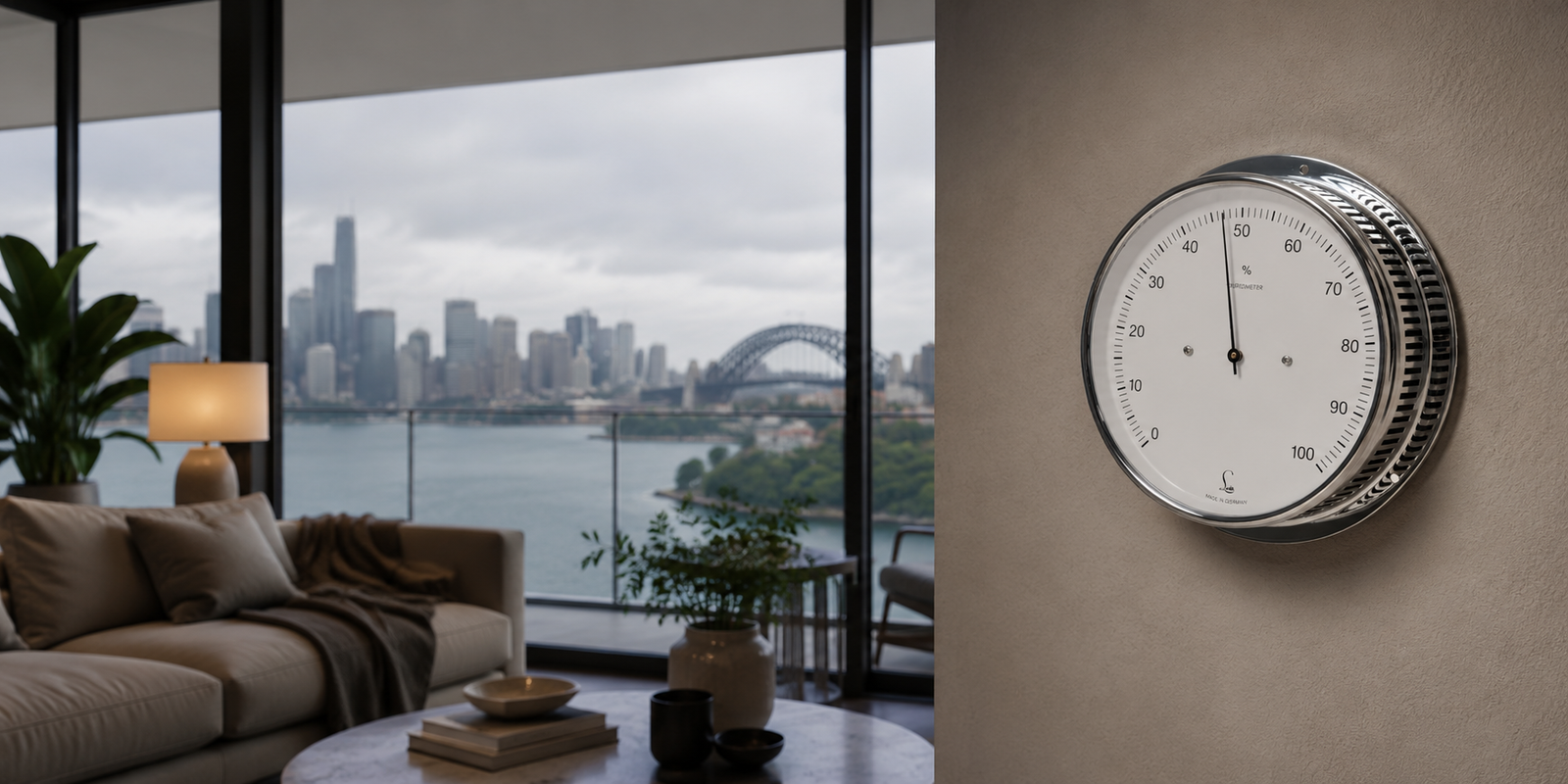

Sydney Humidity Levels: What’s Normal and How to Measure Indoor Humidity
Sydney is a beautiful place to live, but anyone who has spent a damp week near the coast, in an apartment, or in an older home knows the feeling: the air starts to feel heavy, windows fog up, washing takes forever to dry, and the house can begin to feel less than charming.
That is where a hygrometer earns its place. A hygrometer measures humidity — the amount of moisture in the air — so you can stop guessing and start seeing what is actually happening inside your home.
Humidity is not always obvious at first. You may not notice it until you see condensation, smell mustiness, find mould, or feel that the house never quite dries out properly. A good humidity gauge gives you a simple reading, so you can decide whether to ventilate, use a dehumidifier, improve airflow, or simply keep an eye on things.

What Is Indoor Humidity?
Indoor humidity is the amount of water vapour in the air inside your home. It is usually shown as relative humidity, written as a percentage.
For example, if your hygrometer reads 65% relative humidity, the air inside the room is holding quite a lot of moisture. If it reads 30%, the air is much drier.
Neither extreme is ideal. Air that is too dry can feel uncomfortable. Air that is too damp can make a room feel musty, encourage condensation, and create the kind of environment where moisture problems become more likely.
What Is a Good Humidity Level for a Sydney Home?
As a practical guide, many homes feel most comfortable when indoor humidity sits around 40–60% relative humidity. If your home is regularly sitting above 60%, especially overnight or during wet weather, it may be worth improving ventilation or using a dehumidifier.
For moisture and mould prevention, a safer target is often to keep humidity below 60%, and ideally around 30–50% where possible. The exact number will depend on the room, the season, and how the space is used.
Quick guide to indoor humidity readings
- Below 30%: The air may feel dry.
- 30–50%: A good target range for many homes.
- 40–60%: Often comfortable, but watch the upper end.
- Above 60%: The home may be getting too damp, especially if you also notice condensation, musty smells or mould.
Why Sydney Homes Can Feel Humid
Sydney’s humidity can vary depending on the suburb, season, rain, sea breeze, building type and how much ventilation a home gets. Coastal homes, shaded apartments, bathrooms, laundries, wardrobes and bedrooms can all hold extra moisture if airflow is poor.
Humidity can also build up from everyday life:
- showers and baths
- cooking without enough extraction
- drying washing indoors
- closed-up rooms during wet weather
- poor ventilation in apartments or older homes
- water leaks, damp walls or drainage issues
A hygrometer will not fix the humidity for you, but it will tell you when the room is getting too damp. That is the useful part. You cannot manage what you cannot measure.
How Do You Measure Humidity at Home?
To measure indoor humidity, you need a hygrometer. You may also see these called humidity gauges, humidity meters or moisture meters.
A hygrometer gives you a humidity reading as a percentage. Many models also include a thermometer, which is useful because temperature and humidity work together. A room can feel very different at 18°C and 60% humidity compared with 26°C and 60% humidity.
For most homes, a thermometer and hygrometer combination is the most practical choice because it shows both temperature and humidity in one glance.
Where Should You Put a Hygrometer?
Place your hygrometer where you want to understand the real conditions of the room. Avoid putting it directly beside a heater, air conditioner, open window, stove, shower, kettle or humidifier, as those spots can give you an extreme reading that does not represent the whole room.
Good places to use a hygrometer include:
- bedrooms that feel damp or stuffy
- living rooms and home offices
- wardrobes or storage areas
- bathrooms and laundries, if the instrument is suitable for that environment
- wine cellars and storage rooms
- saunas, using a proper sauna thermometer-hygrometer
What Happens If Indoor Humidity Is Too High?
High indoor humidity can make a home feel uncomfortable and can contribute to moisture-related issues over time. You may notice:
- condensation on windows
- musty smells
- mould on walls, ceilings, curtains or furniture
- swollen timber or sticking doors
- damp wardrobes or stored items
- washing that takes a long time to dry
If someone in the household has asthma, allergies or respiratory sensitivity, dampness and mould are especially worth taking seriously. A hygrometer is a simple first step because it gives you a clear humidity reading before the problem becomes obvious.
What To Do If Your Sydney Home Is Too Humid
If your hygrometer regularly reads above 60%, start with the basics.
- Ventilate when outdoor conditions allow. Open windows or doors to create cross-flow, especially after showers, cooking or drying washing.
- Use extractor fans. Bathrooms, kitchens and laundries are major moisture sources.
- Dry washing outdoors where possible. Indoor drying adds a surprising amount of moisture to the air.
- Use a dehumidifier in damp rooms. This can be especially helpful in bedrooms, apartments, wardrobes and poorly ventilated spaces.
- Check for leaks or water damage. Persistent high humidity may point to a building issue.
- Let sunlight and airflow into the home. Dark, closed-up rooms are often the first to feel damp.
Keep checking the hygrometer after making changes. The goal is not to obsess over the number. The goal is to understand the pattern.
Hygrometer, Thermometer or Weather Station: Which One Do You Need?
The right instrument depends on what you want to measure.
| Instrument | What it measures | Best for |
|---|---|---|
| Hygrometer | Humidity | Checking if a room is too damp or too dry |
| Thermometer | Temperature | Monitoring indoor or outdoor temperature |
| Thermometer + Hygrometer | Temperature and humidity | Most homes, bedrooms, offices, wine cellars and storage spaces |
| Weather Station | Usually barometric pressure, temperature and humidity | People who want a fuller picture of local weather and indoor conditions |
Why a Weather Station Can Be Useful in Sydney
If you want more than just humidity, a traditional weather station may be a better fit.
A proper analogue weather station usually combines three useful instruments:
- a barometer to show changes in atmospheric pressure
- a hygrometer to show humidity
- a thermometer to show temperature
Together, those readings tell you far more than a single number on a phone app. You can see what is happening in your own home and local environment, not just the forecast for the broader Sydney region.

Best Types of Hygrometers for Sydney Homes
There is no single best hygrometer for everyone. The best choice depends on where you will use it.
For general home humidity
Choose a simple hygrometer or thermometer-hygrometer. This is ideal for bedrooms, offices, living rooms, nurseries, wardrobes and damp-prone spaces.
For wine storage
Choose a wine cellar thermometer and hygrometer. Wine storage is not only about temperature. Humidity also matters, especially if you are storing bottles for longer periods.

For saunas
Choose a proper sauna thermometer and hygrometer. Sauna conditions are different from ordinary rooms, so you want an instrument designed for heat and humidity.

For people who love weather
Choose a weather station. It is the better option if you want humidity, temperature and barometric pressure together. It also makes a much more interesting gift than a plain plastic gadget.
Why Choose a Fischer Hygrometer or Weather Station?
At Barometers & Clocks, we specialise in proper weather instruments — not throwaway gadgets pretending to be useful.
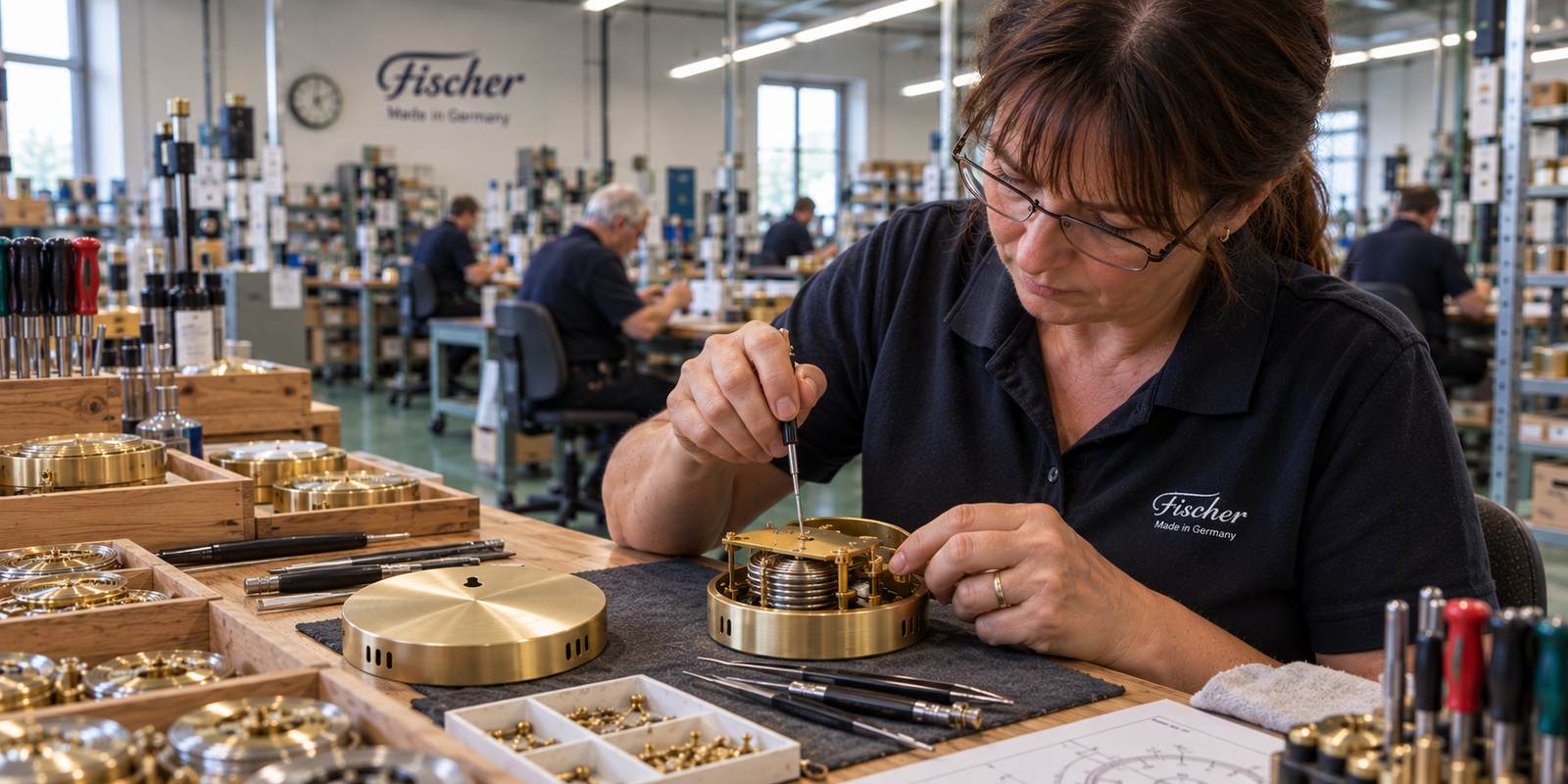
Fischer weather instruments are made in Germany and chosen by customers who want quality, accuracy, longevity and a classic analogue display that actually looks good in the home.
A Fischer hygrometer or weather station is a good choice if you want:
- a clear analogue dial
- quality materials
- a practical instrument that looks right on the wall
- something suitable for a home, office, wine cellar, sauna, boat or meaningful gift
- a proper piece of equipment, not a short-lived plastic screen
Shop Hygrometers for Sydney Homes
Whether you are monitoring a damp apartment, a coastal home, a wine cellar, a sauna or a weather-watching corner of the house, we have a range of hygrometers, thermometer-hygrometers and weather stations available online.
Thermometer + Hygrometer
Check temperature and humidity in one easy-to-read instrument.
Weather Stations
Measure humidity, temperature and barometric pressure together.
Fischer Instruments
German-made weather instruments for people who like things done properly.
Frequently Asked Questions About Sydney Humidity Levels
What is a normal indoor humidity level in Sydney?
Many homes feel comfortable around 40–60% relative humidity, but if your home is regularly above 60%, it may be getting too damp. For moisture control, it is often better to aim below 60%, and closer to 30–50% where possible.
How do I measure humidity inside my home?
Use a hygrometer. A hygrometer measures relative humidity and shows the result as a percentage. A thermometer-hygrometer also measures temperature, which is useful for understanding how the room really feels.
Is a humidity gauge the same as a hygrometer?
Yes. In everyday language, humidity gauge, humidity meter and hygrometer are commonly used to describe the same type of instrument.
Why does my Sydney apartment feel humid?
Apartments can hold humidity if there is limited airflow, poor extraction, little direct sunlight, or regular indoor drying of clothes. Bathrooms, laundries and bedrooms are common problem areas.
Can a hygrometer prevent mould?
A hygrometer does not remove moisture or mould by itself, but it helps you see when humidity is getting too high. That gives you the chance to ventilate, dehumidify or investigate moisture problems before they get worse.
Should I buy a hygrometer or a weather station?
If you only want to measure humidity, choose a hygrometer. If you want temperature as well, choose a thermometer-hygrometer. If you want humidity, temperature and barometric pressure together, choose a weather station.



Leave a comment (all fields required)